Bird Droppings November 14, 2026
Learning to Focus Our Own Lens
Wandering around looking for deer and chasing the sunrise this morning, I found myself wondering: How do we know if we are good teachers? I joked that perhaps I could give students a little questionnaire. “Am I a good teacher? Yes or no?” If only it were that simple.
Sometimes we receive a note. A former student remembers something we said years ago. A student tells us how much they enjoyed our class or how much they learned. Those moments matter. But many days pass with no note, and we go home wondering whether we reached anyone.
A few minutes of observation can leave a great deal unseen, too. Someone walking into a classroom may see a student sitting quietly. The teacher may know how much trust it took for that student to enter the room at all. Understanding what we are seeing takes time, attention, and a willingness to ask.
As I thought about supporting another teacher, I caught myself wanting to explain what I could see. After all these years, surely, I could offer an answer or two. But I kept coming back to the same thought: I want that teacher to see it for themself. Then binoculars came to mind.
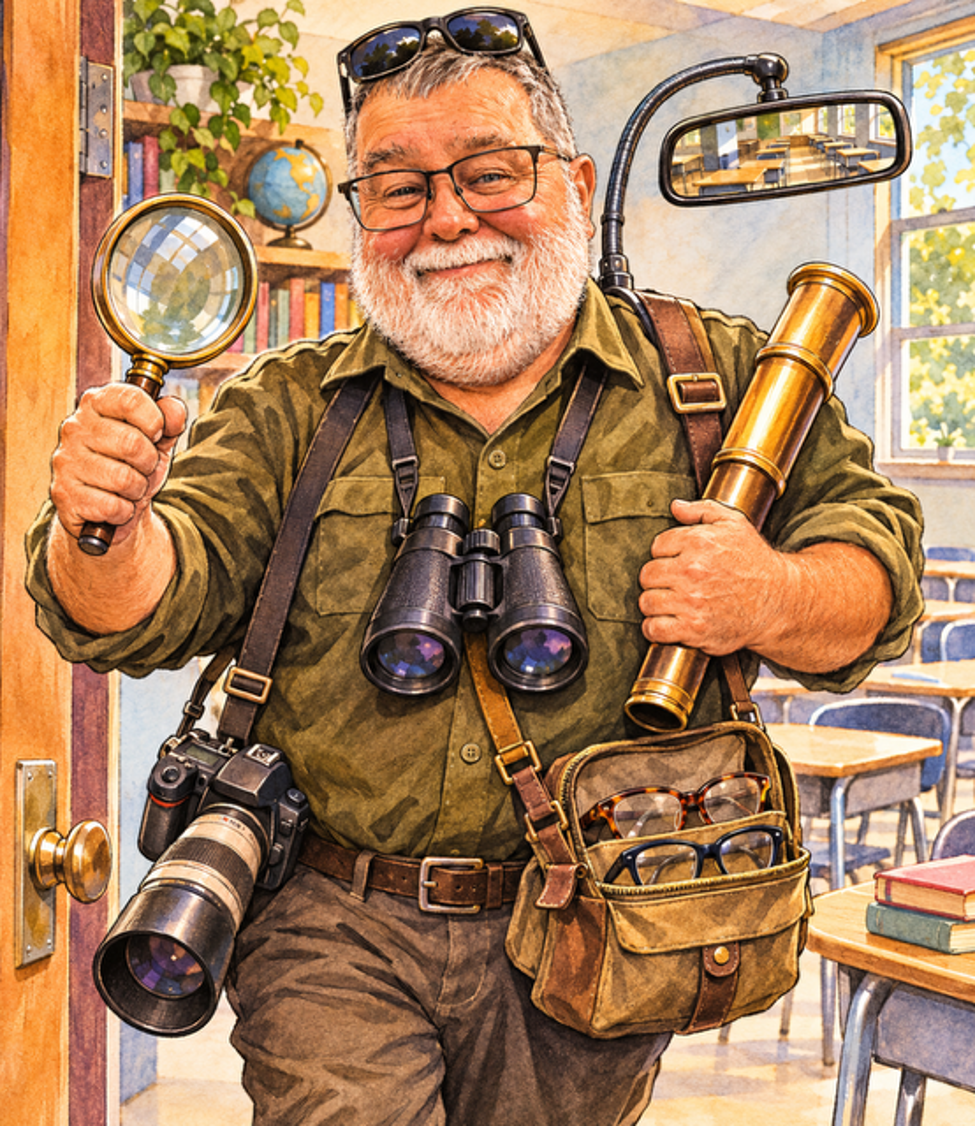
When I hand my binoculars to one of my grandchildren, I must remind them to adjust the focus. I wear glasses. My eyes are different from theirs. What looks clear to me may look blurry to them, even though we are looking at the same deer, the same bird, the same patch of woods. I can help them find where to look. They still have to focus with their own eyes.
Perhaps that is part of what we can offer one another as teachers. We can sit together and ask, “What did you notice? What happened before that? What did the student do next? What do you think made the difference?” And then we need to listen. Their answers may bring something into focus for us, too.
I think about the objects in my old classroom and office. A feather, an old stickball stick, a photograph. A student might pass something for weeks before finally asking about it. That question could open a conversation neither of us had planned. The object had been there all along. On that day, something caught their attention. Learning often happened that way in my room. I could make space for it, pay attention, and be ready when the question came.
I am still pondering how we recognize good teaching. A student’s note is one piece. What students learn and can do is another. So are the questions they begin asking, their willingness to try again, and the growing confidence to share what they think. We need to keep looking at those pieces, including the ones that tell us something needs to change.
For a teacher who is tired and questioning everything, another person’s patient attention may help them begin looking again. This morning, somewhere between a deer sighting and a conversation about teaching, I realized I have spent years reminding my grandchildren to adjust the binoculars. I am still learning to offer teachers that same room to focus. Please keep all in harm’s way on your mind and in your hearts, and please always give thanks, namaste.
My family and friends, I do not say this lightly,
Mitakuye Oyasin
(We are all related)
docbird


Leave a Reply